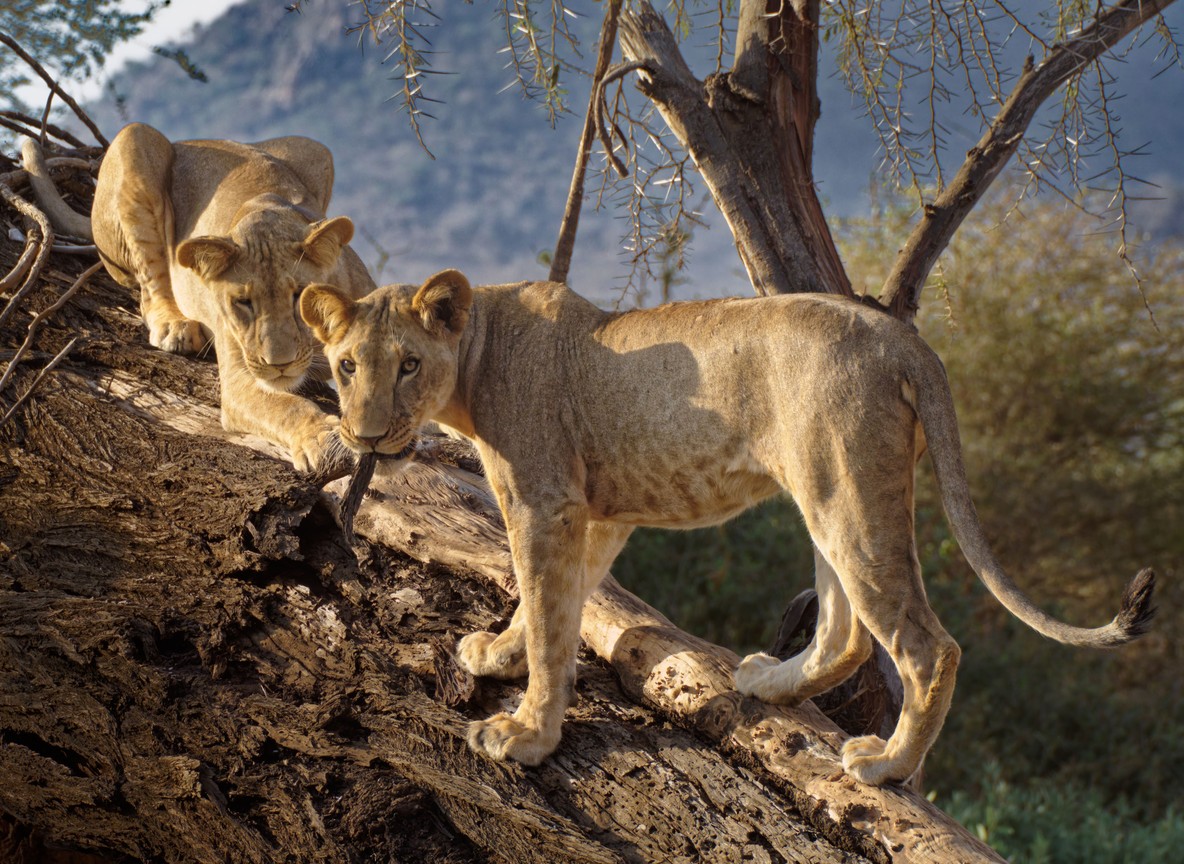
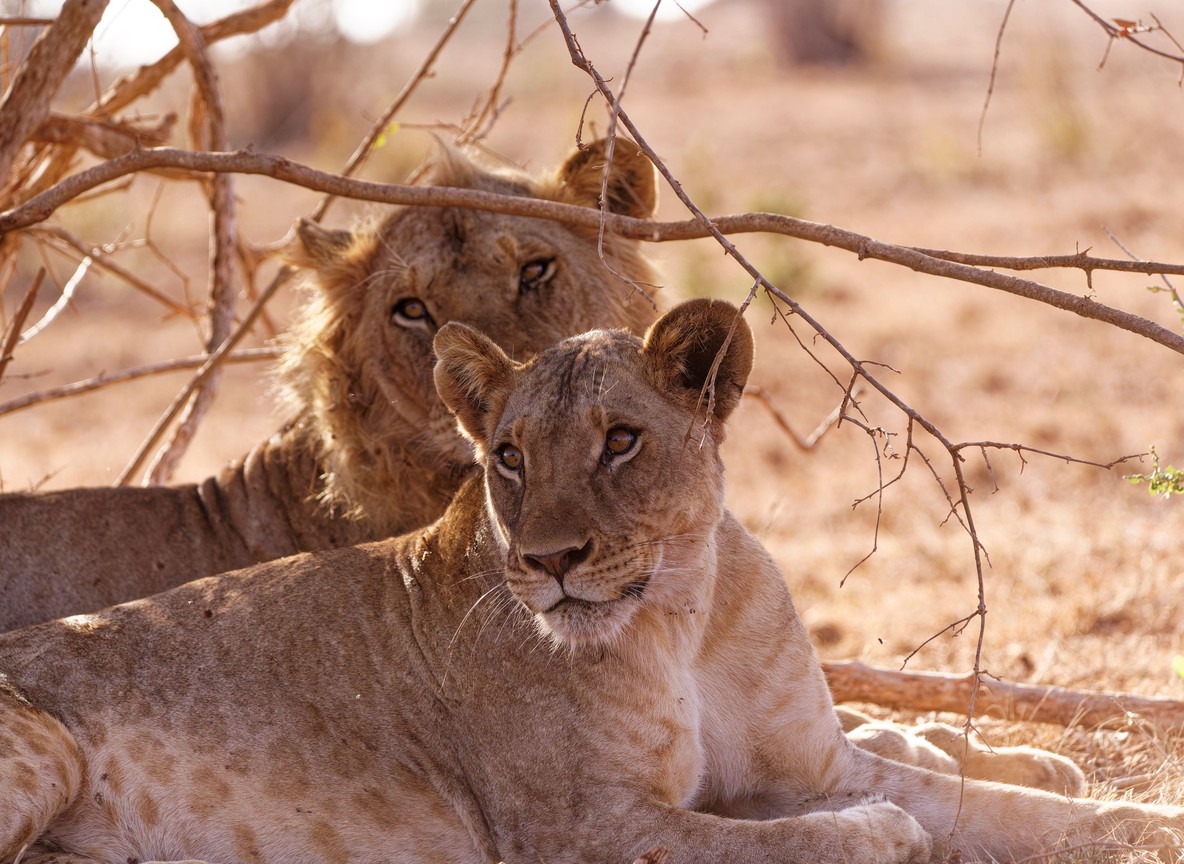
Lions do not normally climb trees. Most prides in Africa hunt, rest, and sleep on open ground. The Ishasha sector, in the far south of Uganda’s Queen Elizabeth National Park, is one of just two places on the planet where a resident pride climbs into the canopy on a regular basis. The other is Lake Manyara National Park in northern Tanzania. Touring Insights breaks down why Ishasha’s lions do this, where the sector sits inside the wider park, and what it actually takes to get there and see it for yourself.
What Makes Ishasha’s Lions Climb Trees
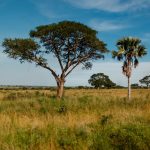
Researchers do not have one confirmed answer, but three theories keep coming up. The first is heat and insects. Ishasha’s grasslands trap warmth and tsetse flies at ground level, so a breezy branch offers relief. The second is vantage point. A lion resting eight or ten meters up can scan the plains for prey or rival prides without moving a muscle. The third is simple habit passed down through a pride. Cubs raised by tree-climbing mothers tend to climb too. Ishasha’s prides favor the broad, low forks of sycomore fig trees and candelabra euphorbia, both common along the Ishasha River floodplain. Sightings are never guaranteed. Guides say lions climb most often in the heat of midday and come down to hunt at dawn and dusk.
Ishasha and Lake Manyara: The Only Two Places on Earth
Ishasha and Lake Manyara are the two national parks where tree-climbing lions can be reliably spotted. Both parks are far apart in size, cost, and setup, which changes how a trip around each one gets planned.
| Feature | Ishasha sector, Queen Elizabeth NP (Uganda) | Lake Manyara National Park (Tanzania) |
|---|---|---|
| Park size | 1,978 km2 (whole park); Ishasha is the southern sector | 330 km2 |
| Estimated tree-climbing lion population | approx. 20-30 lions (recent WCS survey); some operator estimates cite up to 3 prides and roughly 50 | smaller, fluctuating pride; exact count varies by season |
| Distance from nearest large town | approx. 412-460 km from Kampala, 6-7 hr drive | approx. 125 km from Arusha, 2.5 hr drive |
| Non-resident entry fee (indicative) | USD 40 per 24 hr | USD 59 per adult per 24 hr |
| Typical tree species used | sycomore fig, candelabra euphorbia | acacia and fig trees along the lake basin |
Lake Manyara sits closer to a major safari hub and costs more to enter. Ishasha takes longer to reach but usually means fewer vehicles at each sighting.
Where Ishasha Sits Inside Queen Elizabeth National Park
Queen Elizabeth National Park covers 1,978 km2 in western Uganda, stretching from the Rwenzori foothills down to the Ugandan-Congolese border. Ishasha is the park’s separate southern sector, cut off from the main Mweya area by roughly 123 km of road. Most day-to-day park activity, including boat cruises on the Kazinga Channel, happens up at Mweya. Ishasha runs on its own rhythm: open savannah, fewer vehicles, and a shallow river that marks the border with the Democratic Republic of Congo. The Ishasha River floodplain is where almost every tree-climbing sighting happens, concentrated along a stretch of road game drive vehicles cover slowly, scanning the canopy.
Getting to Ishasha: Real Distances and Airstrips
Ishasha is remote by Uganda standards, which is part of why it stays quiet. Three routes cover most visitors. One runs straight from Kampala. Another comes down from Mweya inside the same park. A third crosses over from Bwindi Impenetrable National Park, where most gorilla trekking happens.
| Route | Distance | Drive time | Notes |
|---|---|---|---|
| Kampala to Ishasha gate | approx. 412-460 km | 6-7 hr | Via Mbarara; road quality varies by section |
| Mweya (QENP main hub) to Ishasha | approx. 123 km | approx. 3 hr | Same park, separate sector |
| Bwindi (Buhoma) to Ishasha | approx. 64 km | 2.5-4 hr | Popular combo with gorilla trekking; road can wash out in rain |
| Kihihi airstrip to Ishasha gate | approx. 15-20 km | approx. 30 min | Nearest airstrip; scheduled flights from Entebbe |
Flying into Kihihi cuts the trip from a full day of driving to a short transfer. Most travelers still combine Ishasha with a Bwindi gorilla trek or a Mweya-based game drive. The drive time only pays off as part of a longer loop, rather than a standalone trip.
Best Time of Day and Season to Spot the Lions
Midday heat pushes lions up into the branches, so game drives between 11am and 3pm give the best odds, the opposite of most African safari advice to go out at dawn. The dry seasons, December to February and June to September, thin out the grass and make spotting a lion silhouette against a tree trunk easier. Wet months bring taller grass and fewer vehicles on the road, so sightings become harder to confirm even when lions are present. No guide can promise a sighting on a single game drive. Most lodges recommend at least two full days in Ishasha to raise the odds of a confirmed climb.
Where to Stay Near Ishasha
Accommodation options thin out fast once you leave Mweya. Ishasha Wilderness Camp is the sector’s main permanent camp, with 10 en-suite safari tents set along the Ntungwe River inside the park boundary. A handful of smaller tented camps and lodges near the Ishasha gate and toward Bwindi round out the options, generally at mid-range rates below Mweya’s lodge cluster. Most visitors book two nights at Ishasha. They use the daylight hours for slow game drives along the river, and treat the sector as a stopover between Bwindi and the rest of Queen Elizabeth.
Planning Fees and Permits
Entry into Ishasha falls under the standard Queen Elizabeth National Park gate fee, currently an indicative USD 40 per 24 hours for non-residents, payable at the Ishasha gate or in advance through a tour operator. That fee covers park access only. Game drive vehicle hire, a guide’s fee, and any accommodation are priced separately and vary by operator. Travelers combining Ishasha with Bwindi gorilla trekking should budget for the gorilla permit on top, since it is not included in any park entry fee. Rates change without notice, so confirm current figures with the Uganda Wildlife Authority or a licensed operator before booking.
Conservation Threats and Why Sightings Are Not Guaranteed
Ishasha’s lions face real pressure. The Wildlife Conservation Society has tracked lion density in Queen Elizabeth National Park falling from about 6 per 100 km2 a decade ago to roughly 4 per 100 km2 more recently. Snaring set for antelope and bushmeat catches lions too, and retaliatory poisoning after livestock predation has killed multiple lions in past years. Uganda Wildlife Authority and WCS run joint patrols to pull snares and monitor collared lions across the sector. Research has also found that Ishasha’s lions cross the nearby border into Congo when dispersing to new territory. That movement makes the pride count harder to pin down, and it makes cross-border protection critical to the population’s survival. None of this changes how a game drive works, but it explains why guides treat every sighting as a genuine event rather than a routine stop.
Explorer Notes
Bring binoculars stronger than you think you need. From a vehicle on the track, a resting lion blends into a fig tree’s shadow at 50 meters. Ask your driver-guide to check known fig trees along the river loop first, since guides track which trees prides have used recently. Go out again in the early evening if a midday drive comes up empty. Lions sometimes climb down to hunt right at last light, which also makes for better photos than the flat midday sun. Pack for cool mornings and hot afternoons. Ishasha sits lower and warmer than the Bwindi highlands just a few hours away, so layers matter more than most Uganda itineraries suggest.
FAQ
Where exactly are the tree-climbing lions in Uganda? They live in the Ishasha sector, the southern section of Queen Elizabeth National Park, roughly 123 km south of the park’s main Mweya hub.
Is Ishasha really one of only two places to see tree-climbing lions? Yes. Ishasha and Lake Manyara National Park in Tanzania are the two national parks where this lion behavior is reliably observed.
How far is Ishasha from Bwindi gorilla trekking? About 64 km, a 2.5 to 4 hour drive depending on road conditions, which is why many travelers pair the two in one trip.
What is the best time of day to see the lions climbing trees? Late morning through early afternoon, roughly 11am to 3pm, when heat and insects push lions up into the branches.
How much does it cost to enter Ishasha? An indicative USD 40 per 24 hours for non-residents, the standard Queen Elizabeth National Park gate fee. Confirm current rates before booking.
What to Read Next
- Planning a Bwindi gorilla trek nearby? See how the Ishasha detour fits into a combined itinerary in the distance table above.
- Comparing Uganda’s parks for a first safari? Check how Queen Elizabeth’s Mweya sector differs from Ishasha for game drives and boat cruises.
- Weighing Uganda against a Tanzania add-on? Use the Ishasha-versus-Lake Manyara table to plan which tree-climbing lion sighting fits your route.
Ishasha rewards patience more than most safari stops. Check the Tour Packages page for a Uganda itinerary that pairs Ishasha with Bwindi or Mweya, or ask a partner operator how to fit the sector into a wider Uganda route.